The history of the Diversity in Organizations, Communities & Nations Research Network reflects an enduring commitment to dialogue and transformation. What began as a local initiative exploring multiculturalism in Australia has become an international community shaping global conversations about equity, identity, and belonging.
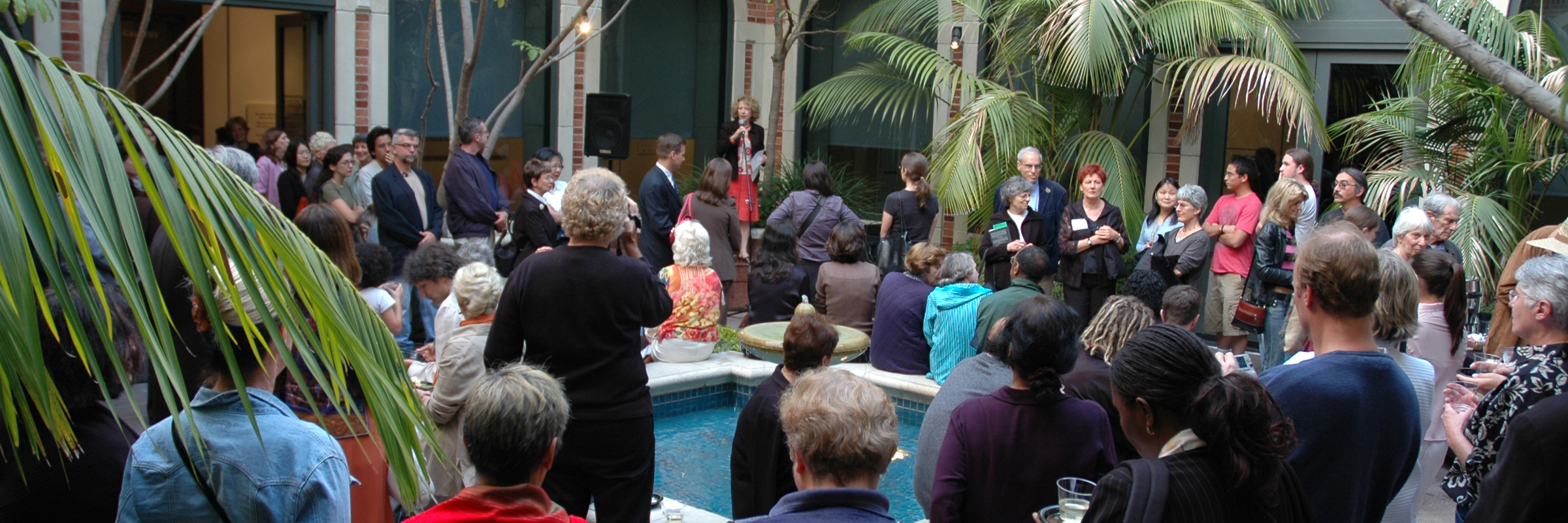
Fourth International Conference on Diversity in Organizations, Communities & Nations, University of California, Los Angeles, California, USA (2004)
A Short History
Exploring the meanings of difference, inclusion, and belonging across societies.
The Diversity in Organizations, Communities & Nations Research Network brings together researchers, practitioners, educators, and policymakers committed to understanding the dynamics of diversity and inclusion. Member-based and scholar-led, the Network fosters interdisciplinary dialogue on the cultural, political, and organizational conditions that define belonging in contemporary life.
Founded in 2000 at the University of Technology Sydney, the Diversity in Organizations, Communities & Nations Research Network began as a response to intensifying debates around multiculturalism and social cohesion in Australia. What started as a local initiative quickly expanded into a global platform examining how societies negotiate difference, belonging, identity, and equity.
From its early meetings in Sydney, Geelong, Honolulu, and Los Angeles, the conference has traveled across continents—to institutions such as the University of British Columbia, University of Western Cape, Queen’s University Belfast, the Central Institute of Ethnic Administrators (Beijing), the University of Hong Kong, the University of Granada, the University of Toronto, the University of Curaçao, and the University of Nicosia—each hosting thematic explorations ranging from migration and human rights to decoloniality, economic resilience, and intercultural leadership.
Paul James, the Founding Chair (2000–2011), built the Network’s intellectual architecture around social theory, globalization, and interculturalism, establishing its early reputation for rigorous engagement with diversity in policy, public life, and community formation. Jock Collins (Chair, 2012–2018) expanded the Network’s applied and sociological lens—bringing in research on migration, labor markets, ethnic entrepreneurship, and public policy—strengthening partnerships across the Asia-Pacific and Europe. Since 2019, Eugenia Arvanitis has led the Network as Chair, joined by Spanish Co-Chairs Carmen Miguel Vicente and Mari Ángeles Medina Sánchez, collectively advancing work on pluralism, inclusive governance, civic participation, and the cultural politics of belonging across multilingual and transnational contexts.
Throughout its 25-year history, the Network has hosted influential thinkers whose work has reframed global discussions on diversity and justice. Plenary speakers such as Marcia Langton, Walter Mignolo, Aihwa Ong, Crain Soudien, Lisa Coleman, Brendan O’Leary, and Douglas Brinkley have contributed insights on Indigenous rights, decolonial theory, migration, inequality, and institutional transformation—each helping to widen the Network’s intellectual and geographic reach. Partnerships with organizations including the Australian Multicultural Foundation, City of Amsterdam, have further connected scholarly dialogue to civic, governmental, and community-based initiatives.
The Network’s publishing ecosystem is anchored by the On Diversity Journal Collection, a set of bilingual (English/Spanish) journals exploring organizational diversity, community diversity, diverse identities, and diversity in education. These journals address themes such as race, ethnicity, gender, migration, intersectionality, multicultural policy, equity practices, and the social dynamics of identity—supporting both theoretical and applied research. This collection is member-based and scholar-led, emphasizing participatory peer review and global accessibility. Each year, the Network recognizes outstanding research through the International Award for Excellence, selected from the highest-ranked peer-reviewed articles. Recent award-winning work has addressed themes such as intimacy and family in late modernity, compassion and space for 2SLGBTQ communities, Indigenous resilience during the COVID-19 pandemic, decolonial citizenship, and cross-cultural pedagogies—reflecting the Network’s broad engagement with social transformation.
Long-form scholarship is supported by the On Diversity Book Imprint, which welcomes monographs and edited volumes across fields such as social justice, intercultural studies, decolonization, workplace diversity, community development, and educational equity. The imprint is intentionally inclusive, supporting both broad and highly specialized topics and offering Open Access pathways to ensure global accessibility.
Today, the Diversity in Organizations, Communities & Nations Research Network continues to serve as a global meeting point for scholars, practitioners, and policymakers committed to understanding and shaping the social worlds we build together—advancing research, practice, and dialogue toward more equitable, pluralistic, and resilient societies.
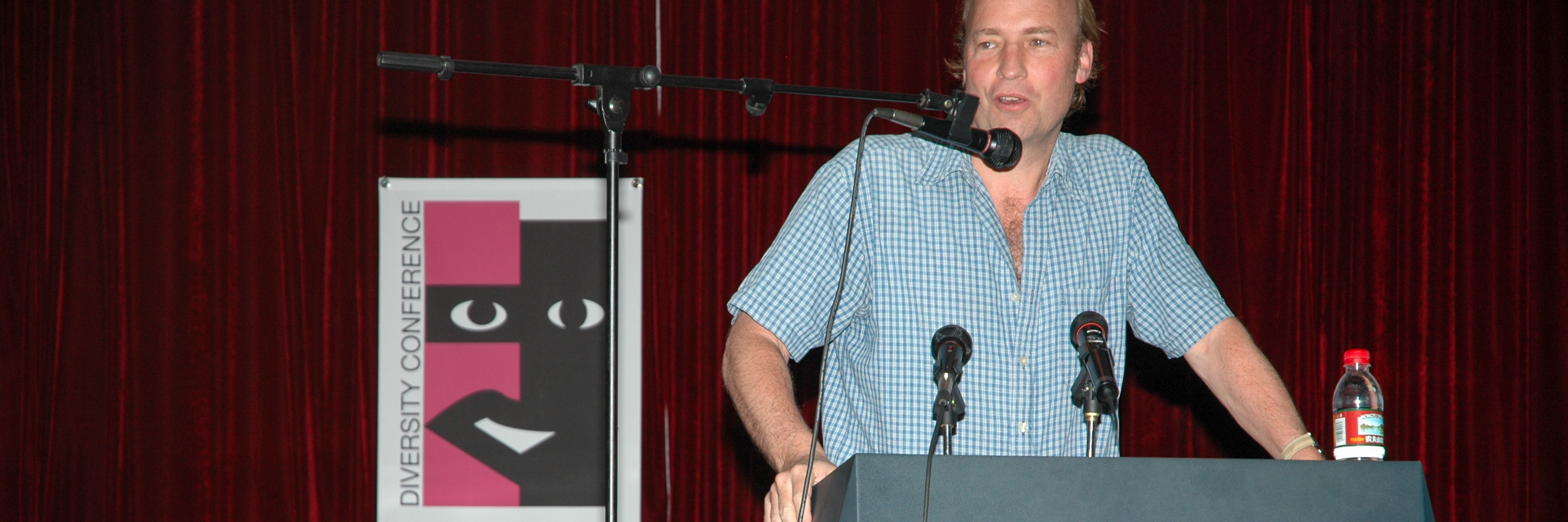
Paul James, Fifth International Conference on Diversity in Organizations, Communities and Nations, The Central Institute of Ethnic Administrators, Beijing, China (2005)
Research Network Chairs
We are thankful for the leadership of the following Research Network Chairs.
Eugenia Arvanitis
Current Chair and Editor
(2019 - )
Jock Collins
Chair and Editor
(2012-2018)
Paul James
Founding Chair and Editor
(2000-2011)
Spanish Research Network Chairs
Carmen Miguel Vicente
Current Chair and Editor
Mari Ángeles Medina Sánchez
Current Chair and Editor
Past Conferences
2000 - Differing Dialogues, Sensible Solutions, University of Technology, Sydney, Australia
2001 - Redefining the Mainstream: Local Government, Inclusive Communities, Deakin University, Woolstores Campus, Geelong, Australia
2003 - Cultural Transformations of Globalization, East-West Center, University of Hawai'i Manoa, Honolulu, Hawaii
2004 - Axes of Uncertainty, University of California, Los Angeles, California, USA
2005 - Understanding Ethnicity, The Central Institute of Ethnic Administrators, Beijing, China
2006 - Human Rights, Diversity and Social Justice: After Hurricane Katrina, New Orleans, USA
2007 - Social Cohesion, Social Capital and Citizenship, VU University Amsterdam, Holland
2008 - Dimensions of Diversity, HEC Montreal, Montreal, Canada
2009 - Diversity and Identity in a New Global Order, Riga International School of Economics and Business Administration, Riga, Latvia
2010 - Appropriation or Approximation, Queen’s University Belfast, Belfast, UK
2011 - Spaces of Public Dialogue, University of the Western Cape, South Africa
2012 - Multiculturalism, Identity and Citizenship, University of British Columbia, Vancouver, Canada
2013 - Diversity on the Margins, Charles Darwin University, Darwin, Australia
2014 - Diversity and Solidarity, Institute for Gender and Diversity in Organizations, Vienna University of Economics and Business, Vienna, Austria
2015 - Affirming Diversity for Social and Educational Justice, University of Hong Kong, Hong Kong SAR, China
2016 - Human Diversity and the Environment - Mapping Difference in the Era of the Anthropocene, University of Granada, Granada, Spain
2017 - Urban Diversity and Economic Growth, University of Toronto, Chestnut Conference Centre, Toronto, Canada
2018 - Without Walls - Affinity in Diversity, University of Texas at Austin, Austin, USA
2019 - Border Crossing Narratives: Learning from the Refugee Experience, University of Patras, Patras, Greece
2020 - Urban Diversities: Exclusion and Inclusion of Immigrants and Refugees at the Local Level, University of Milan, Milan, Italy (Virtual)
2021 - Economic Resilience and Sustainable Development in Times of Crisis: Pathways to Education, Inclusion, Action, University of Curaçao Willemstad, Curaçao (Virtual)
2022 - Rethinking the Local: Who, How, Why?, University of Curaçao Willemstad, Curaçao
2024 - The Future We Want: Socio-Environmental Challenges in Times of Climate Emergency, Lusiada University, Lisbon, Portugal
2025 - Volatility, Uncertainty, Complexity, and Ambiguity: Navigating Intercultural LeadershipUniversity of Nicosia, Nicosia, Cyprus
Plenary Speakers Highlights
The International Conference on Diversity in Organizations, Communities & Nations has a rich history of featuring leading and emerging voices from the field, including:
Marcia Langton
Professor, University of Melbourne, Melbourne, Australia (2000)
Hon. Joan Kirner
Former Premier of Victoria, Australia (2001)
Brendan O'Leary
Professor, University of Pennsylvania, Philadelphia, USA (2003)
Walter Mignolo
Professor, Duke University, Durham, USA (2003)
Aihwa Ong
Professor, University of California, Berkeley, USA (2005)
Rob Walker
Professor, University of Victoria, British Columbia, Canada (2005)
Douglas Brinkley
Professor, Rice University, Houston, USA (2006)
Crain Soudien
CEO, Human Sciences Research Council (HSRC), South Africa (2011)
Lisa Coleman
Chief Diversity Officer and Special Assistant to the President, Harvard University, Cambridge, USA (2017)
Partners
The Diversity in Organizations, Communities & Nations Research Network has had the pleasure of working with the following organizations:
Australian Multicultural Foundation, Melbourne, Australia